
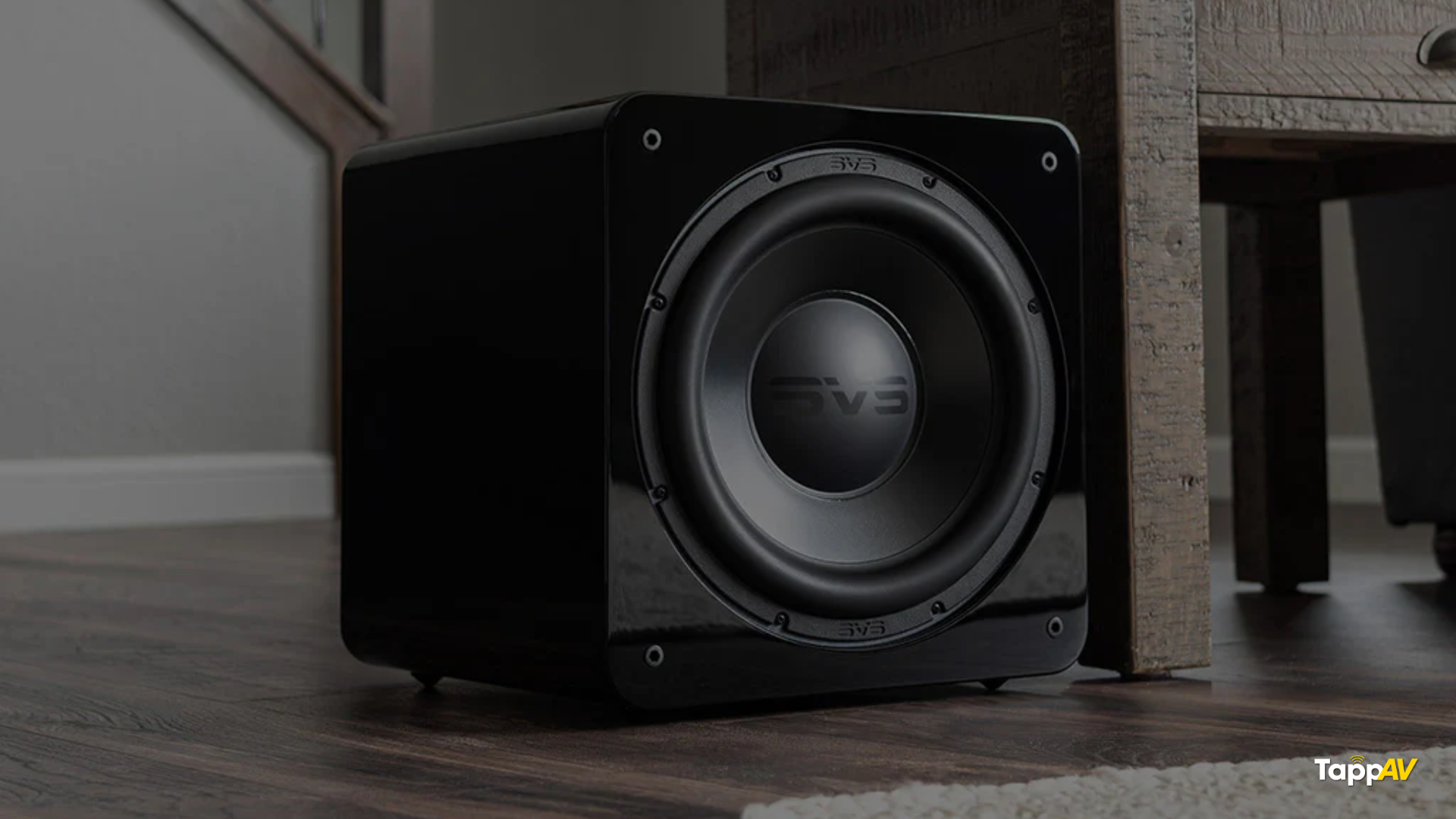
Here's a scene every home theater owner knows: the screen goes dark, a plane engine spools up, and then, that low, physical rumble you feel in your chest before you even consciously hear it. That's not your soundbar. That's not even your front speakers working overtime. That's a subwoofer doing the one job nothing else in your system can do.

Sealed vs Ported Subwoofer – Which One Is Right for You?
Here's a scene every home theater owner knows: the screen goes dark, a plane engine spools up, and then, that low, physical rumble you feel in your chest before you even consciously hear it. That's not your soundbar. That's not even your front speakers working overtime. That's a subwoofer doing the one job nothing else in your system can do.
Why a Subwoofer Matters More Than People Think
Most home theater conversations obsess over screens, projectors, and speaker count, and completely underrate the subwoofer, treating it like an optional bass boost. That's a mistake, and here's why.
Your regular speakers, even good tower or in-ceiling ones, physically struggle to reproduce frequencies below roughly 60-80Hz. That range isn't just "extra bass." It's where explosions, engine rumble, thunder, and the low end of orchestral scores actually live. Without a dedicated subwoofer, all of that either gets rolled off entirely or forces your main speakers to strain, distorting the rest of the sound in the process.
A good subwoofer does three things at once:
- Completes the frequency range, it fills in everything your other speakers physically can't reproduce, so the system sounds whole instead of thin
- Takes the load off your main speakers, freeing them to focus on mids and highs cleanly, which improves dialogue clarity and detail across the board
- Adds the physical, felt dimension of sound, this is the difference between hearing a movie and feeling it, and it's a big part of why a proper home theater feels so different from even a great soundbar setup
This is also why, at TappAV, we treat the subwoofer as a design decision, not an accessory. The size, type, and placement of your sub can make or break how a well-built home theater actually performs in your room, regardless of how good your projector or screen is.
But here's where most buying guides stop short: they'll tell you to "get a good subwoofer" without explaining that even two excellent subwoofers, with identical drivers and identical power, can sound completely different depending on one design choice, whether the enclosure is sealed or ported.
That's the decision this guide is actually about. Let's break it down.
First, What Does the Enclosure Actually Do?
A subwoofer driver on its own is basically useless, flapping air with no control. The enclosure (the sealed or ported box) is what tames that driver and shapes how the bass behaves. Same driver, two different boxes, two completely different personalities. This is why two subs with identical driver specs can sound worlds apart.
Sealed Subwoofers: The Precision Player
A sealed enclosure is exactly what it sounds like, a fully airtight box. No holes, no vents, just trapped air acting as a cushion for the driver.
What you get:
- Tighter, more accurate bass, the trapped air controls the driver like a spring, so notes start and stop cleanly
- Smaller footprint, sealed boxes are usually more compact, easier to hide in a media unit or behind a screen
- Forgiving of room placement, less prone to boominess in smaller or acoustically tricky rooms
- Better for music and dialogue-heavy content, because the bass doesn't linger or smear

The trade-off:
- Needs roughly 3-4dB more amplifier power to hit the same output as a ported box
- Bass extension rolls off a bit earlier; you lose a touch of that sub-20Hz "floor-shaking" territory unless you spend more
Think of a sealed sub as a well-trained boxer, quick jabs, precise, no wasted motion.
Ported Subwoofers: The Powerhouse
A ported (or "vented") subwoofer has a tuned tube or port built into the cabinet. This port lets air move in and out, effectively using the cabinet itself as a second sound source at low frequencies.
What you get:
- Louder output for the same power, ported boxes are more efficient, so you get more SPL (sound pressure level) per watt
- Deeper extension, that satisfying, chest-thumping sub-bass in action movies often comes from a well-tuned port
- Great for large or open-plan rooms, where you need to move a lot of air

The trade-off:
- Larger cabinet size, the port needs volume and length to be tuned correctly
- If not engineered well (or placed badly), it can sound "one-note boomy", loud at the tuning frequency, weak elsewhere
- Slightly less precise than sealed, the port adds a bit of "overhang," a barely-there delay in how bass stops
Think of a ported sub as a heavyweight puncher, devastating impact, but needs more room to swing.
Sealed vs Ported: Quick Comparison
|
Factor |
Sealed |
Ported |
|
Bass character |
Tight, accurate, controlled |
Deep, loud, high-impact |
|
Best for |
Music, dialogue, apartments |
Action movies, large rooms |
|
Cabinet size |
Compact |
Larger |
|
Power efficiency |
Needs more power |
More efficient |
|
Bass extension |
Slightly less deep |
Deeper sub-bass |
|
Room forgiveness |
High |
Moderate (placement matters) |
So Which One Should You Pick?
Here's where the spec sheet stops mattering and your actual room takes over.
Choose Sealed If:
- You live in an apartment (most of urban Pune, Mumbai, Bangalore, this is you) where boomy, uncontrolled bass means WhatsApp messages from your neighbour's watchman
- Your room is under 150 sq ft or has hard, reflective surfaces
- You watch a mix of music, OTT dramas, and movies, not just action-heavy content
- You want the sub to disappear into your décor rather than dominate it
Choose Ported If:
- You have a dedicated home theater room (10x12 ft or larger) with proper acoustic treatment
- You're building around Dolby Atmos action content and want that visceral LFE punch
- You've got the amplifier headroom and don't mind a slightly bigger box
- Your room already has good bass trapping so a port won't turn into a boom machine
The Part Most Blogs Skip: Room Interaction
Here's the truth nobody tells you at the store, your room decides more than your subwoofer does. Room modes (those standing waves that build up in corners and along walls) can make a sealed sub sound boomy in the wrong spot, or make a ported sub sound thin in the wrong spot. This is exactly why we always insist on a room assessment before subwoofer selection, not the other way around.
At TappAV, when we design a system, we don't just ask "sealed or ported" in isolation. We look at:
- Room dimensions and volume
- Seating position relative to walls
- Whether it's an open-plan space or an enclosed room
- Primary use case (movies vs music vs mixed)
Sometimes the answer is neither, it's dual subwoofers (even two smaller sealed subs) positioned to cancel out room modes, which often outperforms a single large ported sub in tricky rooms.
Quick FAQ
Can I mix a sealed sub with a ported sub in the same system?
Not recommended for stereo/2.1 setups where matching is critical, but in home theater (single LFE channel), it's less of an issue. Still, we'd always tune the crossover and levels carefully if mixing.
Does a ported subwoofer always sound "boomier" than sealed?
Only if it's poorly designed or badly placed. A well-engineered ported sub, properly positioned, sounds punchy, not boomy. Cheap ported subs give the category a bad name.
Which is better for Dolby Atmos?
Neither is inherently "Atmos-ready", but ported subs generally handle the deep, sustained LFE effects in Atmos action scenes with less strain, provided the room supports it.
I have a small apartment but love action movies. What do I do?
This is the most common conflict we solve at TappAV, usually with a well-placed sealed sub (or two) tuned with room correction (like Audyssey, Dirac, or MSO), giving you tight, deep bass without upsetting the building.
There's no universally "better" subwoofer type, only a better fit for your room and your listening habits. Sealed gives you precision and a smaller footprint. Ported gives you scale and slam. The real skill is matching that choice to your actual space, not to a YouTube review filmed in someone else's living room.
Ready to Design Your Dream Home Theater?
Every room is different, your wall colour, your ceiling height, your budget, the way you actually watch. A great projector is only half the story. The other half is system design done right.
Book a free consultation call with TappAV's experts, and let's design a setup that's built around your space, not a generic spec sheet.
Share:
JMGO O2S Ultra Review: Full Breakdown + XGIMI Horizon 20 Max Comparison
Home Theater False Ceiling Design & Wiring Guide: What to Plan Before You Close the Ceiling