
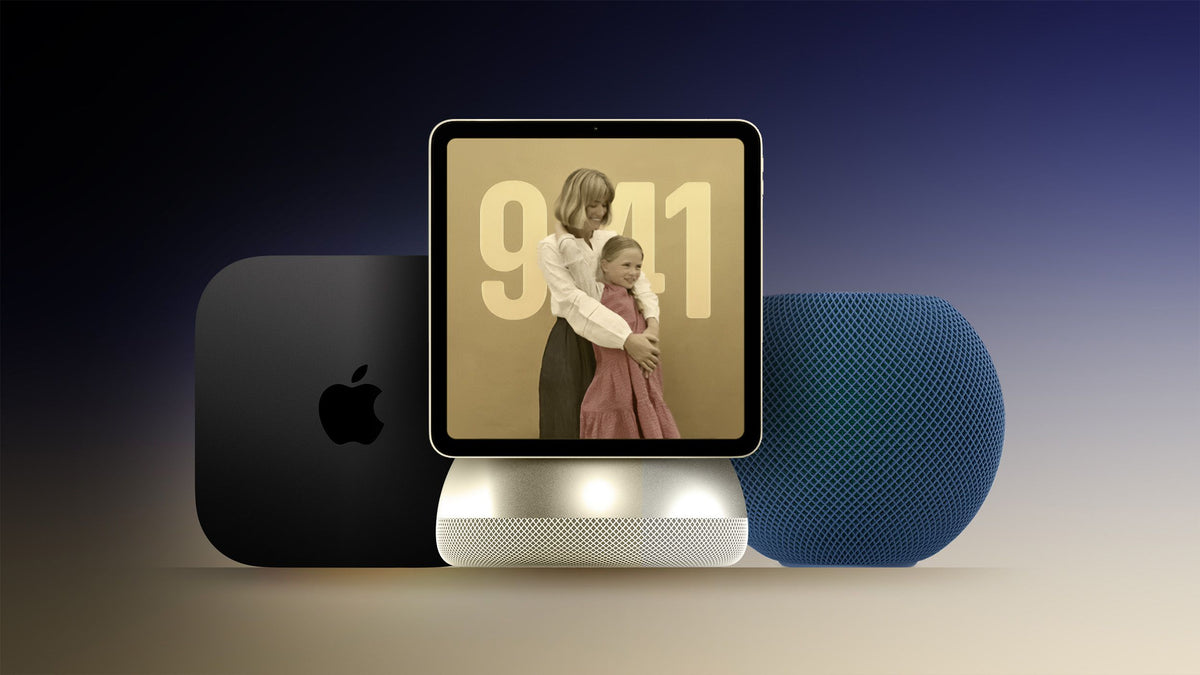
Apple has just made an interesting move in home entertainment. Its new HomePod mini 2 and Apple TV 4K promise smarter voice control, faster streaming, and something particularly interesting for home cinema enthusiasts: a four-speaker surround-sound setup without a traditional AV receiver.
The new lineup was announced on 13 October 2026, with the HomePod mini 2 priced at ₹18,900 and the Apple TV 4K at ₹39,900 in India.
But here's the real question: Is Apple offering a simpler way to enjoy immersive sound at home, or can a compact wireless speaker system genuinely compete with a dedicated home theatre?
Let's look at what has changed, what's new, and who should pay attention.

1. Apple HomePod mini 2: More than a smart speaker?
The original HomePod mini was designed to fit naturally into everyday life. It could play music, respond to voice commands, control compatible smart home devices, and work as part of a multiroom audio setup.
The HomePod mini 2 builds on that idea, with the S10 chip, new colours, and support for Apple's upcoming Siri AI experience. But the most interesting change for AV enthusiasts is how it fits into Apple's home theatre ecosystem.

What's new compared with the original HomePod mini?
|
Feature |
Original HomePod mini |
HomePod mini 2 |
|
Processor |
S5 chip |
S10 chip |
|
Siri experience |
Existing Siri features |
Siri AI support planned via software update |
|
Colours |
Original colour range |
Five colours, including blue |
|
Mac audio |
Standard audio use |
Can serve as a Mac speaker |
|
Apple TV surround sound |
No four-speaker setup |
Supports Apple's new four-speaker configuration |
The key point is that the new model isn't simply about adding another colour or refreshing the hardware. It gives Apple a more capable speaker to build into its wider entertainment ecosystem.
One important caveat: Siri AI features on HomePod mini 2 are scheduled for a future software update, so not every announced capability will be available immediately.
2. Apple TV 4K: A smarter way to find what to watch

A streaming device might seem like a small part of a home cinema system. But it is the interface you interact with every time you sit down to watch something.
Apple's fourth-generation Apple TV 4K focuses on making that experience faster, more conversational, and easier to control.
Here's what stands out.
- A19 chip: Apple claims up to 50% faster CPU performance and up to twice the GPU performance of the previous generation.
- Siri AI: A more conversational way to search for movies and shows, with a full-screen interface.
- Hands-free voice control: Three far-field microphones let you talk to Siri without picking up the remote.
- Find My for the remote: Compatible remotes can be located using Apple's Find My features.
- Smart home control: Apple TV continues to act as a home hub for compatible accessories and automations.
These upgrades make the Apple TV more than a streaming box. It becomes a central control point for entertainment and parts of the connected home.
How does it compare with the previous Apple TV 4K?
The previous generation already offered excellent 4K streaming and access to Apple's entertainment ecosystem. The new model's biggest differences are its faster A19 processor, hands-free Siri AI experience, improved remote-finding features, and expanded speaker configuration.
For someone who already owns a recent Apple TV 4K, the upgrade may not be essential just for streaming. The surround-sound feature, however, is a much more interesting reason to look at the new model.
3. The big news: Four HomePod speakers can create surround sound
This is the feature that deserves the most attention from home cinema enthusiasts.
With the new Apple TV 4K, you can create a four-speaker surround-sound setup using four compatible HomePod speakers. Apple supports either four HomePod mini 2 speakers or four second-generation HomePods, as well as a mixed configuration with matching front and rear pairs.

In practical terms, that means:
- Two speakers form the front pair.
- Two speakers form the rear pair.
- Apple TV coordinates the speakers as a surround-sound system.
- The system automatically calibrates audio timing and levels based on speaker positions.
There is no conventional AV receiver in this configuration, which makes it a potentially appealing option for people who want a cleaner installation and fewer visible components.
But is it the same as a traditional home theatre?
Not quite, and this distinction matters.
A conventional surround-sound system can use dedicated left, centre and right speakers, separate surround channels, one or more subwoofers, and an AV receiver or processor to manage the system. More advanced installations may include height channels for Dolby Atmos and room correction tailored to the listening space.
Apple's four-speaker approach is a different proposition. It prioritises integration, convenience, and a streamlined setup.
It is important not to assume that four speakers automatically deliver the same channel layout, bass capability, or flexibility as a dedicated multichannel system. Apple's announcement describes the four-speaker surround experience and automatic calibration, but that alone does not establish equivalence to a traditional 5.1.2 or 7.1.4 installation.
Our take: This could be a compelling solution for someone who values simplicity and already lives in Apple's ecosystem. For a dedicated cinema room where dynamics, deep bass, precise channel separation, and upgrade flexibility are priorities, a properly designed AV system remains worth considering.
4. Apple's new home lineup: The bigger picture
Apple has also introduced HomeView, a dedicated smart home display, alongside its new Home Collection of connected accessories.
The direction is clear: Apple wants entertainment, voice assistance, and smart home control to feel like parts of one connected experience.

For homeowners, that could mean fewer separate interfaces to manage. For people planning a new home, it also raises a useful question: how should entertainment and automation be designed to work together from the beginning?
A smart home ecosystem is most useful when the underlying planning is right. Network coverage, device compatibility, wiring, lighting control, and the way people actually use their rooms all matter.
The new products are interesting, but the bigger opportunity is designing a home where the technology feels effortless.
5. New Product Prices and availability in India
Here is a quick overview of the main products.
|
Product |
Announced Indian price |
Availability |
|
HomePod mini 2 |
₹18,900 |
From 13 November 2026 |
|
Apple TV 4K (4th generation) |
₹39,900 |
From 13 November 2026 |
|
HomeView |
₹39,900 |
From 13 November 2026 |
|
Apple Home Collection |
Not confirmed for every accessory |
Initial rollout planned for select markets |
Availability and feature rollout can vary by market. In particular, Siri AI support for HomePod mini 2 is planned for a future software update, so buyers should check the current status before making a purchase.
Frequently asked questions
Can the new Apple TV 4K work with four HomePod mini 2 speakers?
Yes. Apple supports a four-speaker surround-sound configuration with the fourth-generation Apple TV 4K and four HomePod mini 2 speakers. Compatible second-generation HomePods can also be used, provided the front and rear speaker pairs match.
Does the new Apple TV 4K replace an AV receiver?
Not universally. It enables a more streamlined Apple-based surround-sound setup, but it does not offer the same flexibility as a conventional AV receiver with separately selected speakers, subwoofers, and configurable surround and height channels.
Is the HomePod mini 2 a major sound-quality upgrade?
Apple highlights enhanced audio experiences and computational audio, but the new processor and smart features alone do not prove a dramatic improvement in sound quality over the original. Actual performance should be evaluated through listening tests and independent measurements.
Do you need the latest Apple TV to use Siri AI?
Apple says Siri AI will be available in beta on Apple TV 4K (second generation or later), subject to supported languages, software, and device requirements. The newest model adds built-in far-field microphones for hands-free control.
The TappAV verdict
Apple's latest home lineup is exciting because it brings together three things people increasingly want from their homes: convenient entertainment, intelligent control, and fewer visible components.
The four-speaker surround-sound feature is the standout development for AV enthusiasts. It offers an alternative for people who want a simpler route to immersive sound without building a conventional AV receiver-based system.
But there is no universal winner. The best home theatre is the one that suits the room, the people using it, and the experience they want to create.
At TappAV, that's always where we believe the conversation should begin: not with the equipment, but with the experience.
Planning your own home cinema? Explore TappAV's project case studies to see how different rooms and requirements lead to different AV solutions and if you want to build one for your space get in touch with our experts.
Share:
From 5.1.2 to 7.2.4: Upgrading a Home Cinema Experience in Jamshedpur